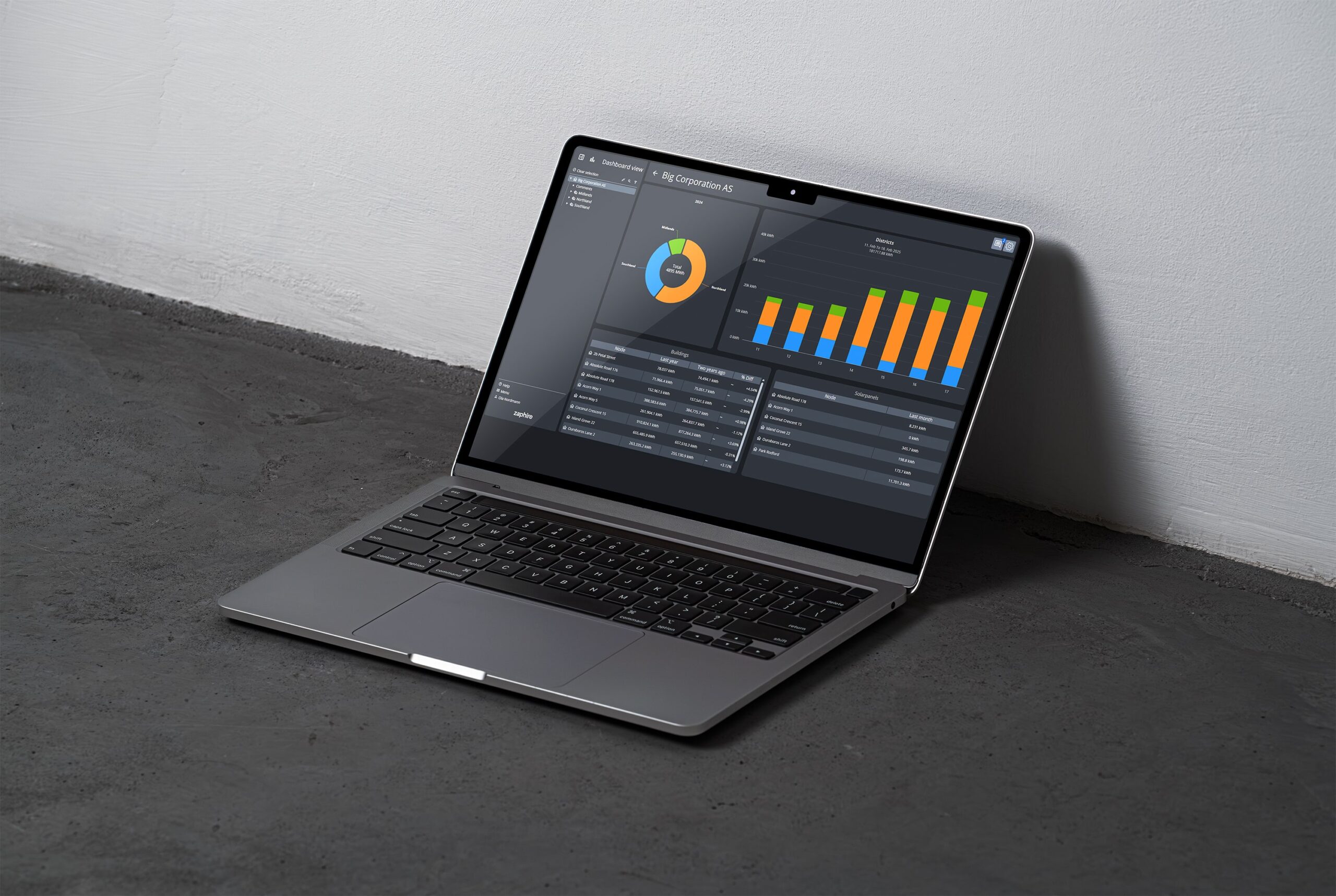
Energy Efficiency in Commercial Buildings with a BMS
Energy efficiency in commercial buildings is not only about using less energy; it is about using energy smarter.
A modern Building Management System (BMS) is the heart of an energy-efficient building. With the right system in place, you get full oversight, automatic control, and continuous optimization of energy use across the entire building stock.
What Does Energy Efficiency in Commercial Buildings Mean?
Energy efficiency in commercial buildings means reducing energy consumption without compromising comfort, operations, or safety. To achieve this, buildings must be monitored and controlled intelligently. This is where the Building Management System plays a key role.
A BMS collects data from all technical systems in the building such as ventilation, heating, cooling, lighting, and energy, and ensures that they work together in an optimal way. In this way you can adjust operations according to needs, time periods, and load, and reduce unnecessary energy use. Many buildings already have a Building Management System (BMS) in place. Instead of replacing the entire system, it is often more cost-effective to reuse and modernize the existing BMS to achieve better energy monitoring and control.
Read more: How to gain control of your energy data
Why Is Energy Efficiency Important for Commercial Buildings?
Commercial buildings account for a significant share of the world’s energy consumption, and many older buildings have little or no automation and limited data availability. By improving energy efficiency with modern Building Management Systems, you can reduce both costs and emissions while creating smarter and more attractive buildings.
The benefits include:
- Lower energy costs: Optimized operation reduces electricity consumption and operating expenses.
- Reduced climate footprint: Efficient energy use supports the company’s sustainability goals.
- Improved comfort: Stable temperature and ventilation provide a healthy indoor environment.
- Increased property value: Smart buildings are more attractive to both tenants and investors.
- Regulatory compliance: A BMS helps you meet requirements related to ESG, energy labeling, and climate reporting.
Who Benefits from a BMS for Energy Efficiency?
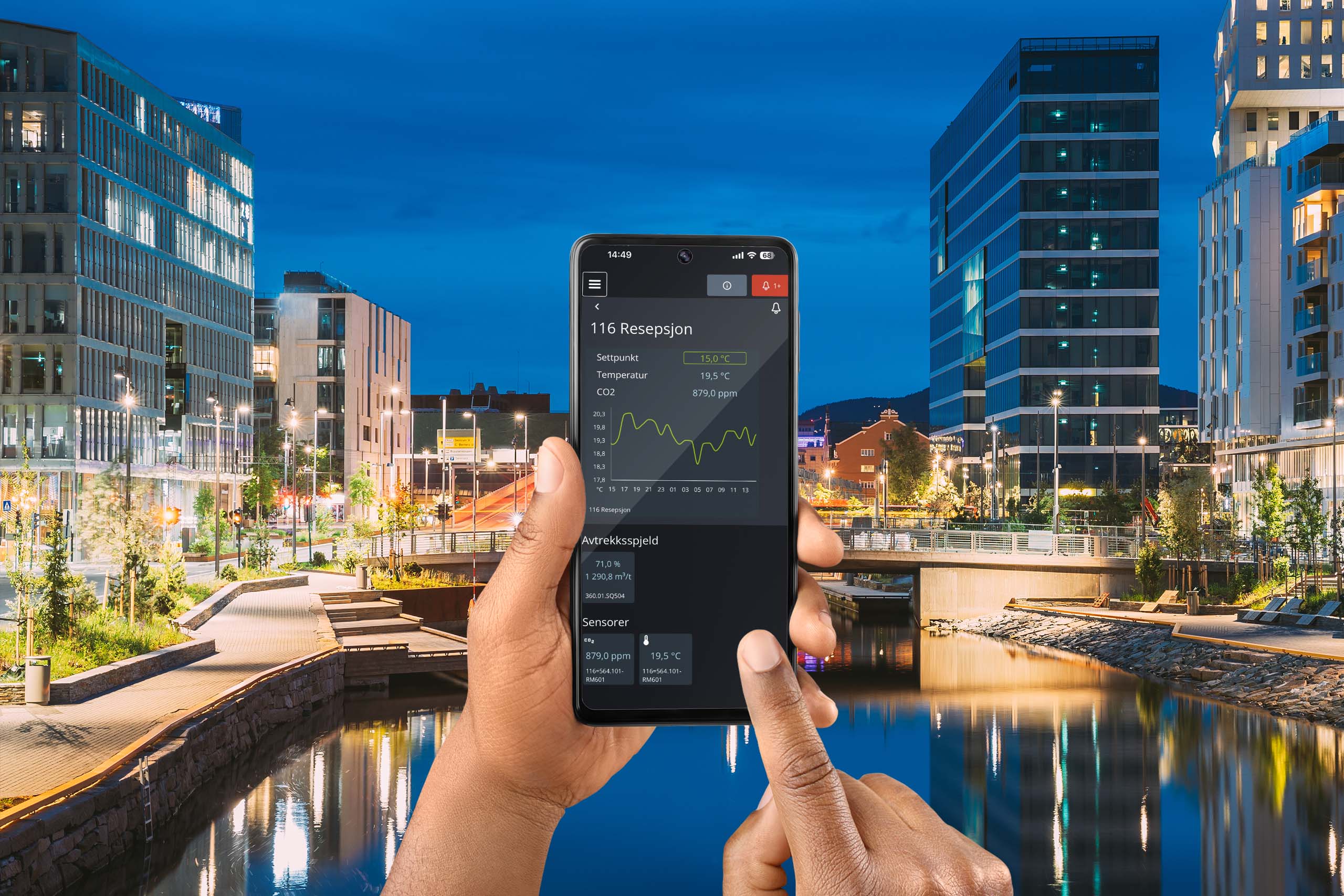
A modern BMS is relevant for anyone who owns, operates, or manages commercial buildings, regardless of size or purpose. The system provides valuable insight and control, and is a central tool for energy efficiency in commercial buildings. Because it collects and analyzes data across the building’s technical systems, it becomes possible to make decisions based on facts instead of assumptions, which helps reduce both energy use and costs. For this to work well over time, flexibility in BMS is crucial.
Office Buildings and Shopping Centers
In office buildings and shopping centers, comfort, lighting, and ventilation account for much of the energy consumption. A building automation system can automatically adjust lighting, heating, and ventilation based on occupancy, outdoor temperature, and opening hours. This provides better comfort for employees and customers while significantly reducing energy costs. For property managers, a BMS also makes it easier to monitor multiple buildings from one location, compare consumption, and identify buildings with potential for improvement.
Hotels and Hospitals
Buildings with continuous operation demand high stability and precision. Hotels must ensure comfort in guest rooms and common areas, while hospitals require strict control of temperature, air quality, and pressure zones. A BMS can contribute to energy efficiency by automatically balancing operation between different zones, adjusting airflows and heating according to actual use, and reducing consumption in unused rooms, without affecting operational quality.
Municipal Buildings and Schools
Public buildings such as schools, sports halls, town halls, and nursing homes often have many different usage patterns and equally many sources of energy waste. A BMS gives the municipality an overview of energy use across buildings and makes it easier to reach climate targets in the municipal action plan. By combining automation, energy monitoring, and reporting, the municipality can take action based on concrete data and achieve documented reductions in energy use. This provides better resource utilization and lower operating expenses, which is especially important during times of tight budgets.
Read how Lillestrøm Municipality improved its operational efficiency with Zaphire here.
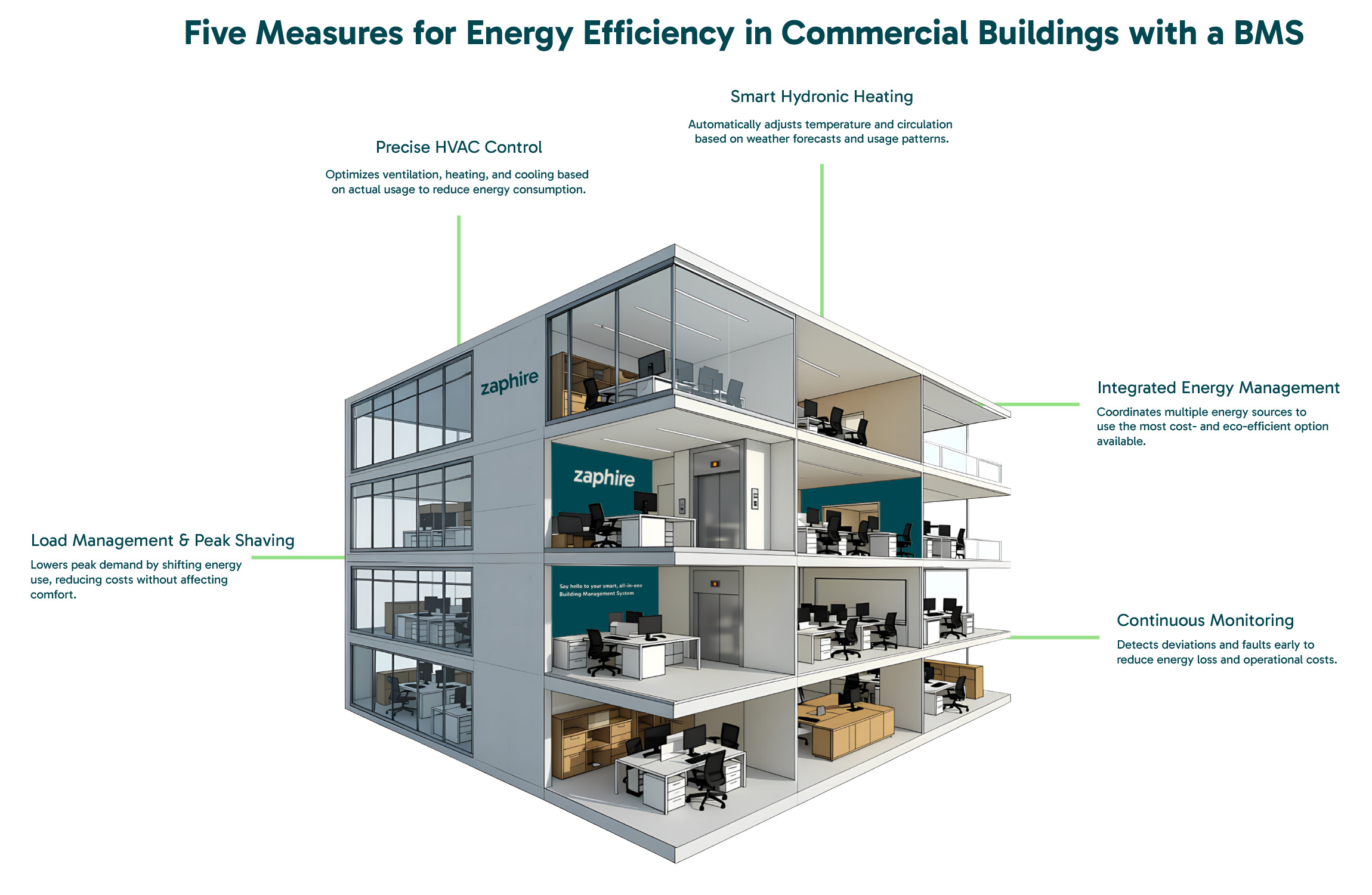
Five Measures for Energy Efficiency in Commercial Buildings with a BMS
A modern BMS is the nervous system of an energy-efficient building. Through precise control of ventilation, heating, cooling, and hydronic energy systems, energy consumption can be optimized without reducing comfort. The following are five examples of how energy efficiency in commercial buildings can be achieved through smarter control with a BMS such as Zaphire.
1. Precise Control of HVAC Systems
Ventilation, heating, and cooling account for most of the energy consumption in commercial buildings. A BMS makes it possible to control these systems dynamically based on operating hours, load, and indoor climate.
By adjusting airflows, pressure, and temperature according to actual need, for example during periods of lower activity, energy use is reduced significantly. The system can also optimize the interaction between heat recovery units, air handling units, and cooling machines to ensure maximum efficiency. With Zaphire’s API integrations, you can also control HVAC according to real needs, such as heating a meeting room before a scheduled meeting.
2. Control of Hydronic Heating Systems
In buildings with hydronic heating or district heating, the system can control supply temperature, circulation pumps, and valves to achieve optimal performance.
Using weather forecasts and consumption patterns, the system can reduce heat production before temperature increases and take advantage of stored heat in the building. This provides more even load and lower energy use without users noticing any difference in comfort. To understand how analyses such as weather normalization build on weather and consumption data to provide even clearer insight into actual energy performance, you can read our explanation of how weather normalization works in energy monitoring.
3. Monitoring and Fault Alerts
One of the biggest advantages of a BMS is continuous monitoring of technical systems. The system provides real-time data on temperatures, airflows, water use, and energy consumption, and alerts immediately if values deviate from normal.
Typical examples include faults in ventilation units, leaks in the heating system, or heating and cooling running at the same time. By discovering such issues early, you can reduce energy loss and costly operational downtime.
Read also: Zero-Trust Networking in Building Automation
4. Load Management and Peak Shaving
Load management is an important measure to reduce energy costs in commercial buildings. Through peak shaving, the BMS can automatically limit power consumption during periods of high demand. This can be done by temporarily lowering ventilation levels, reducing heat production, or shifting the operation of energy-intensive components to periods with lower load. The result is lower demand charges and more stable energy use without noticeable impact on the indoor climate.
5. Integration of Energy Sources and Renewable Energy
A BMS can coordinate multiple energy sources such as district heating, heat pumps, solar energy, and electricity so the building uses the most cost-effective and environmentally friendly source at any time. For example, the system can prioritize heat pumps instead of electric heating when electricity prices are high, or use stored energy in buffer tanks to reduce load peaks. This holistic energy management contributes to significant energy efficiency and lower operating costs over time.