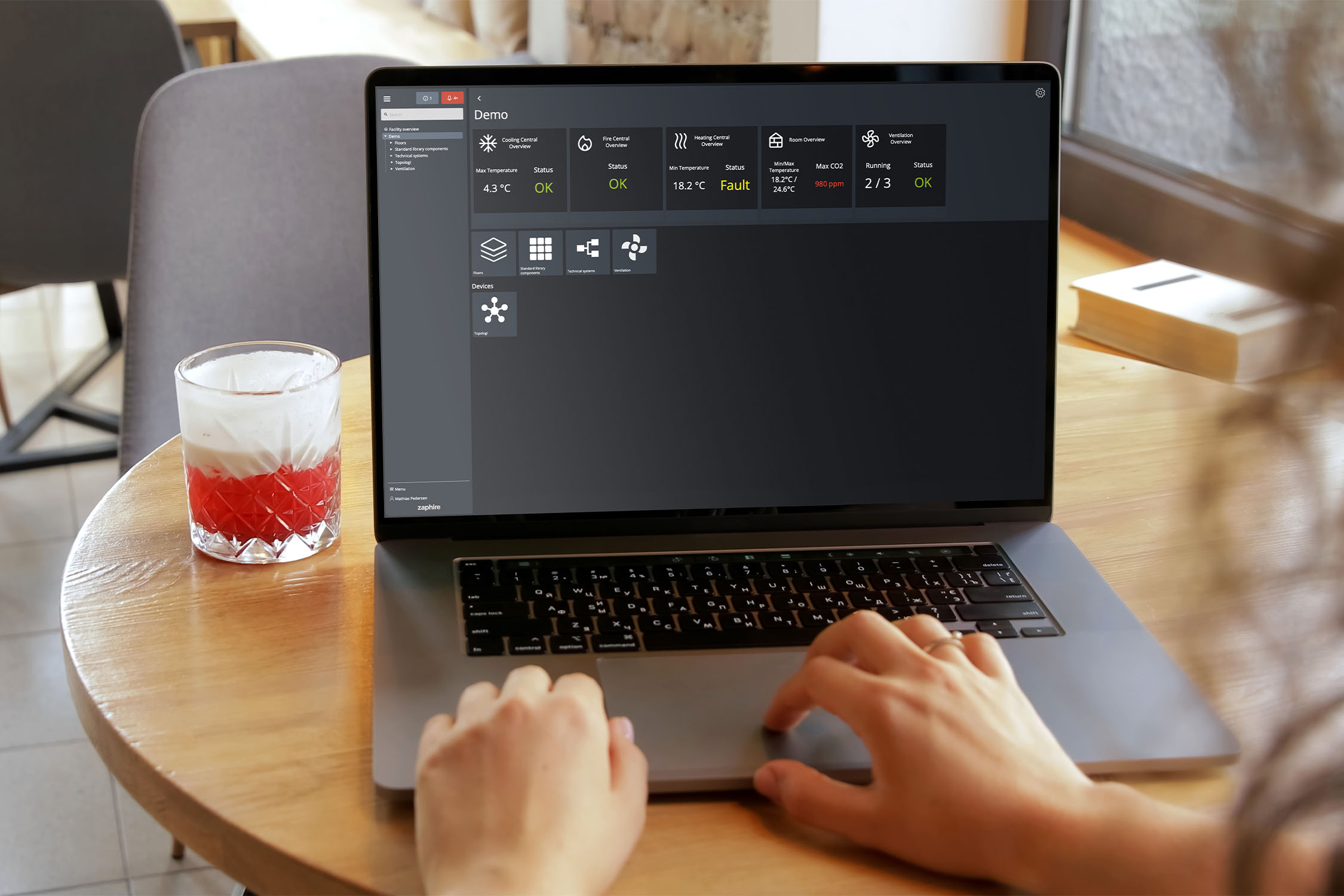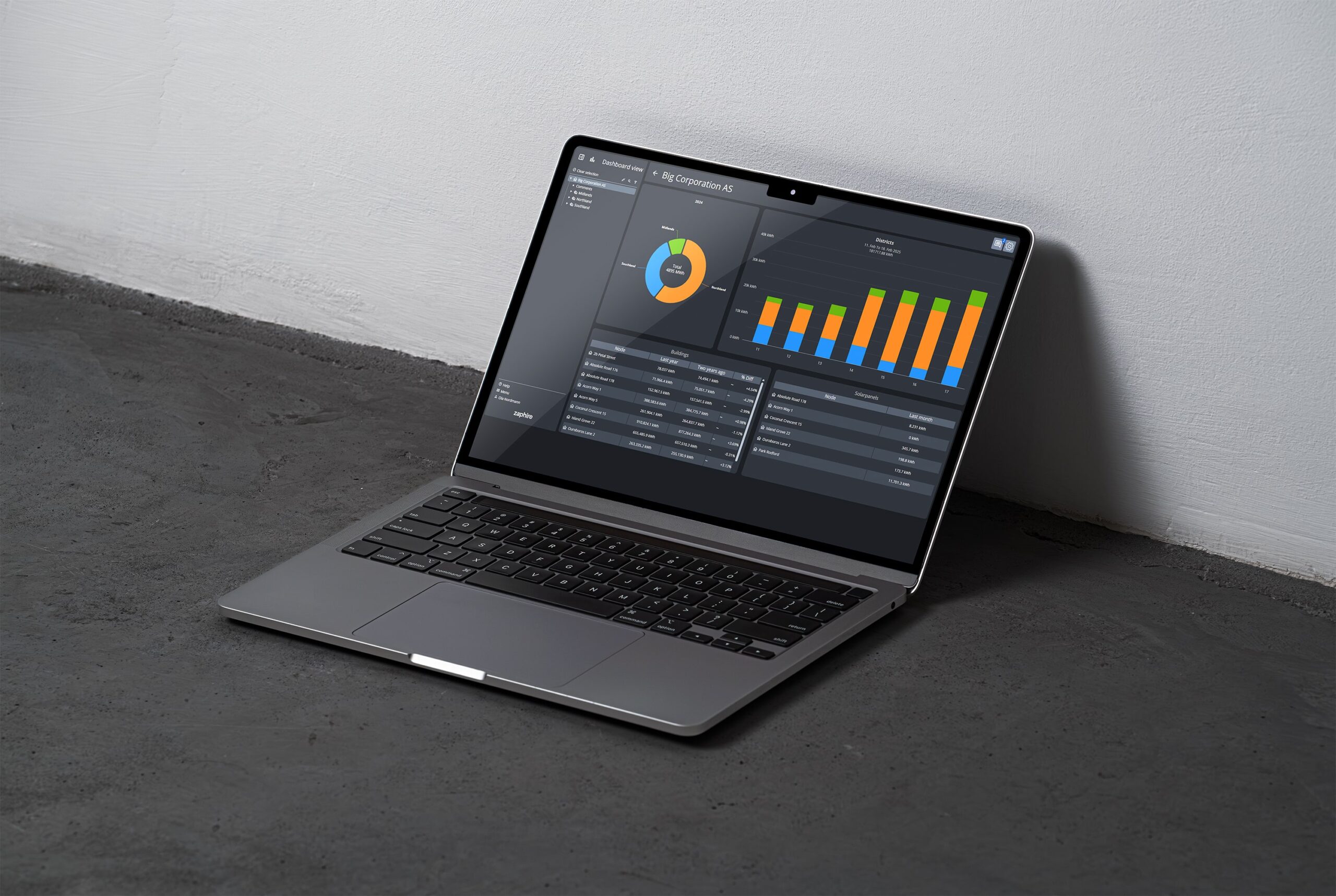
Flexibility in Building Management Systems (BMS) plays an increasingly important role in modern buildings. Technological systems are evolving rapidly, and buildings frequently change their purpose. At the same time, demands for energy efficiency and digitalization continue to grow. A BMS must therefore perform well today. Building owners must also be able to adapt and expand the BMS in the future.
Traditional BMS solutions are often rigid and costly to modify. More flexible solutions, such as Zaphire’s BMS, make it significantly easier to add new functionality, integrate additional technical systems, and meet new requirements without extensive rebuilding.
What Is Meant by Flexibility in a BMS?
Flexibility in a BMS describes how easily users can adapt the system to changes throughout the building’s lifecycle. A modern building rarely has the same technical requirements five or ten years after commissioning. These needs often differ significantly from those at start-up. A flexible BMS therefore helps building owners ensure long-term functionality and cost control. Examples of flexibility in a BMS include:
- Expand with new technical installations - Users can connect new systems such as ventilation, cooling, energy monitoring, solar panels, or EV charging to the BMS without extensive rebuilding. The system does not require new engineering. This enables gradual development of the building in line with evolving needs and investment plans.
- Adapt to changing building requirements - When a building’s use changes - such as new tenants, renovations, or altered operational strategies - operators must adjust the BMS quickly.. Flexibility in a BMS means that access rights and functions can be modified quickly. Alarms and control strategies can also be adjusted without major interventions in the system.
- Integrate with other systems and data sources - A flexible BMS supports open standards and can easily integrate with other technical systems, energy management systems, and third-party platforms. This creates better interaction between systems and provides a more comprehensive view of building operations and energy use.
- Further development without high costs or long downtime - A flexible BMS allows building owners to implement changes and expansions without disrupting normal building operations. High flexibility in a BMS reduces the need for custom programming and external consultants. This results in lower costs and faster implementation.
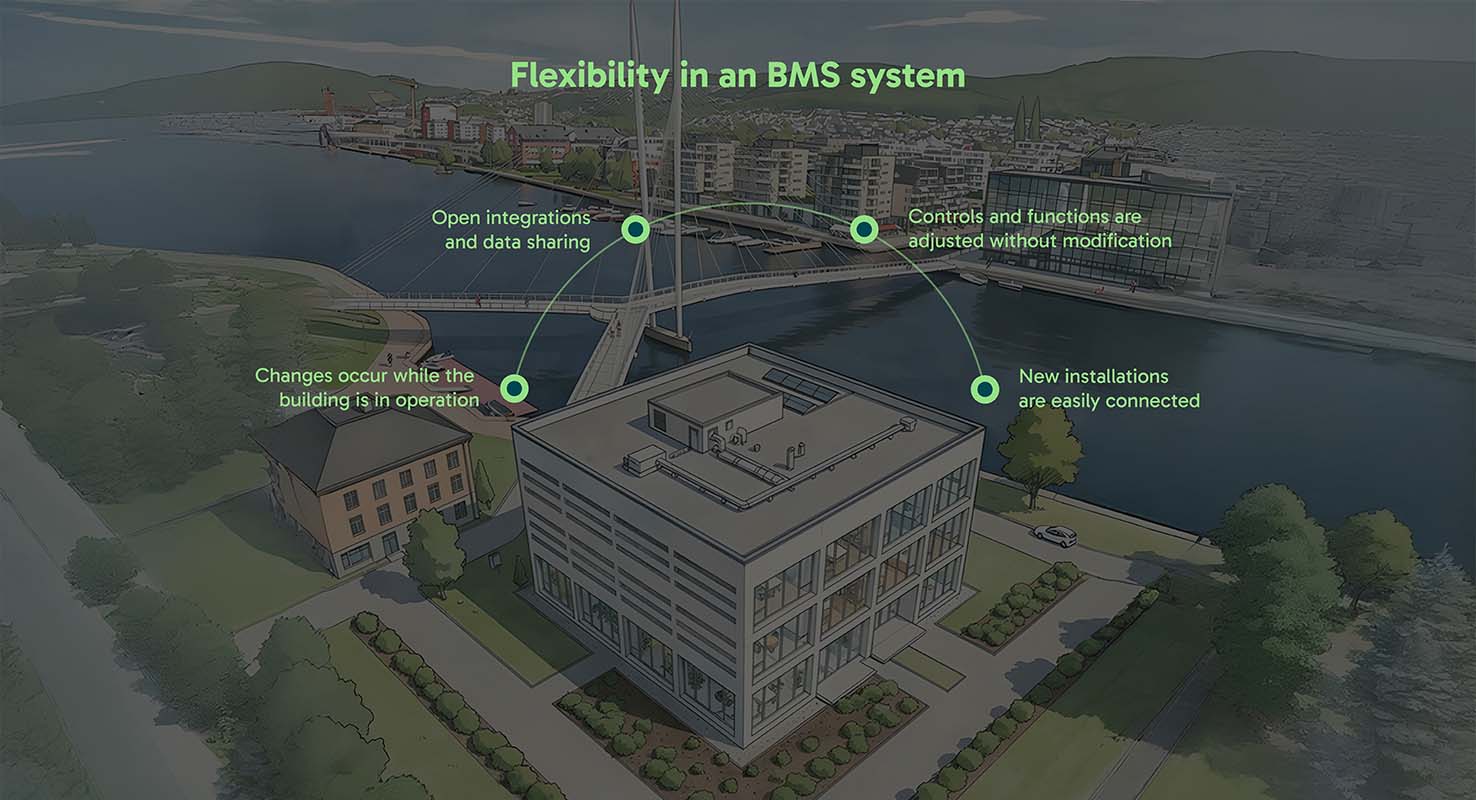
A flexible BMS is therefore not locked into a fixed structure or a single vendor, but is designed for continuous change and development. This significantly extends the system’s technical lifespan and prepares the building for future requirements related to energy efficiency, digitalization, and sustainability.
In many cases, it can be more cost-effective to modernize and reuse an existing BMS rather than starting from scratch - read more about how this works in practice in our article on reusing BMS systems.
Who Benefits Most from a Flexible BMS?
A flexible BMS is particularly well suited for stakeholders with a long-term perspective on buildings and technical installations. For property owners, flexibility provides better control over investments and reduces the risk of technical solutions becoming obsolete too quickly. The ability to adapt the BMS over time makes it easier to meet new requirements. It also reduces the need for large one-time investments.
Facility managers responsible for multiple buildings or large property portfolios also benefit greatly from BMS flexibility. A consistent and scalable system makes it easier to standardize operations, monitor energy use, and implement changes across buildings, while still allowing each building to be tailored to its specific needs.
Operations staff often experience the most direct benefits of a flexible BMS in their daily work. A solution that is easy to modify, expand, and adapt provides better oversight, less manual work, and faster response when needs arise. This leads to more efficient operations and fewer disruptions.
Flexible BMS systems are also particularly well suited for commercial buildings where usage frequently changes, such as office buildings with varying tenants, mixed-use properties, or buildings under development. In these cases, the ability to adapt quickly is crucial to ensuring long-term functionality, comfort, and cost control
Why Is Flexibility in a BMS Important?
Buildings rarely remain static over time. New tenants move in and out, usage patterns change, and requirements for energy efficiency, documentation, and digital collaboration become increasingly stringent. At the same time, new technologies continuously emerge, influencing how technical systems should be controlled and monitored. This makes it essential for a BMS to be adjustable and expandable throughout the building’s lifecycle.
How Flexibility Reduces Lifecycle Costs
In practice, flexibility in a BMS is about reducing lifecycle costs, not just initial investment costs. When a system can adapt to changing requirements, building owners avoid costly retrofits and premature system replacements. A flexible BMS enables gradual development of the building in line with actual needs, providing better cost control over time.
How a Flexible BMS Enables Energy Efficiency
A flexible BMS not only improves adaptability but is also a key enabler of energy efficiency in commercial buildings. When control strategies can be easily adjusted and new data sources integrated, it becomes possible to reduce energy consumption and operating costs through smarter, more data-driven operations. Learn more about this in our article on energy efficiency in commercial buildings.
Operational and Strategic Benefits of a Flexible BMS
A highly flexible BMS makes it possible to handle changes quickly and cost-effectively. When the system is designed for adaptation, new functions, technical installations, and control strategies can be added without extensive engineering or long operational downtime. This provides better control, lower risk, and greater flexibility for both operations and asset management.
Lack of flexibility in a BMS often leads to significant challenges. Changes become expensive due to the need for custom programming and external consultants. Implementation times increase, which can delay projects and negatively affect daily operations. Dependency on a single vendor also increases, limiting choice and making future expansions unnecessarily complex. Over time, this contributes to a shorter system lifespan, as the BMS is not designed to accommodate new requirements and technologies.
A common example is office buildings where new tenants impose varying requirements for ventilation, access control, and energy metering. With a flexible BMS, these changes can be implemented quickly without new engineering or extended downtime. Flexibility in a BMS is therefore not just a technical choice, but a strategic decision to ensure a more robust, future-proof, and economically sustainable building.
Read also: What is a Building Management System?
Limitations of Traditional BMS Systems
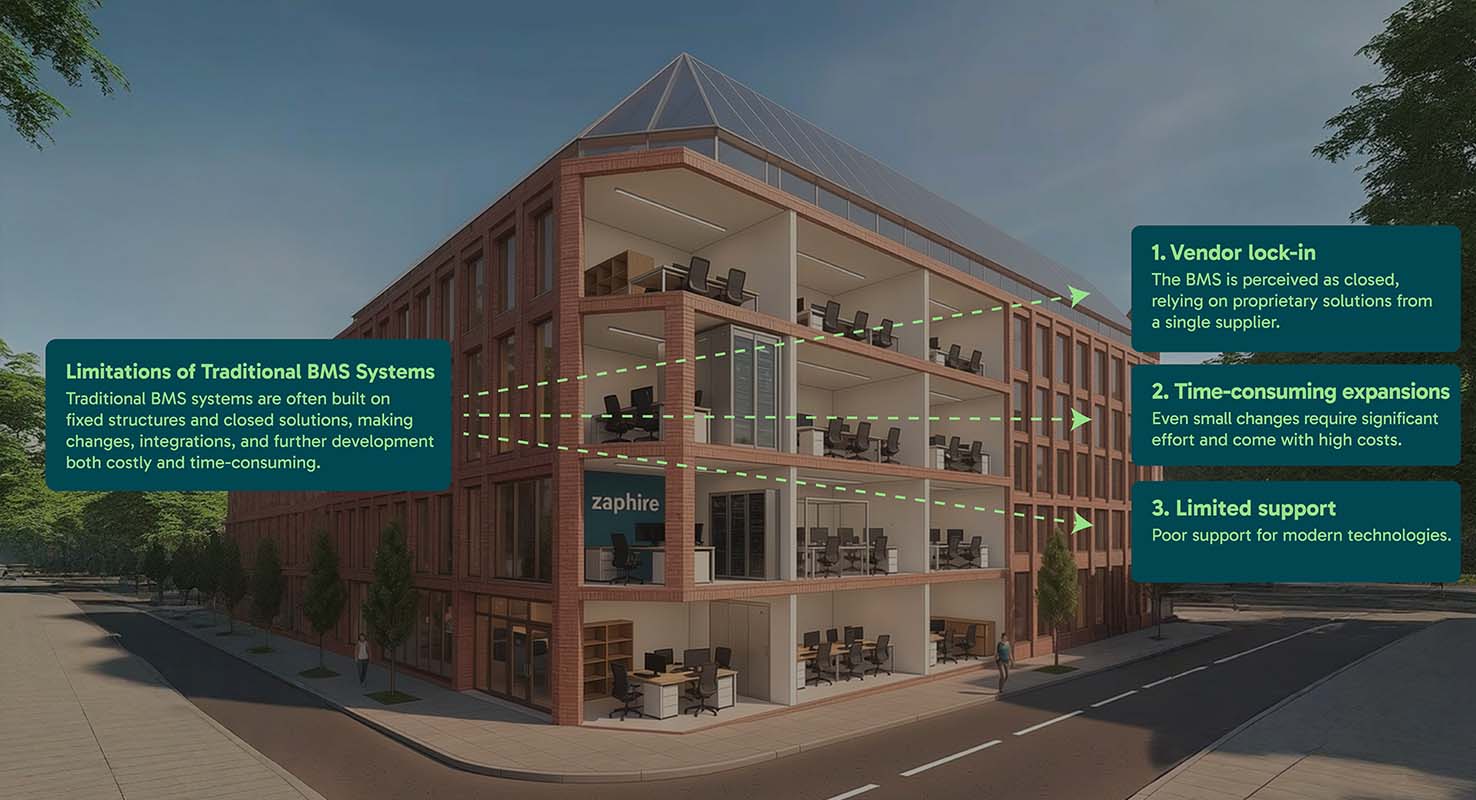
Many existing BMS solutions were developed at a time when requirements for change and integration were far lower than today. Digital collaboration was also less critical. While these systems often perform adequately at commissioning, it becomes clear over time that they are poorly suited to new needs and technologies. Traditional BMS systems often rely on fixed structures and proprietary solutions. A high degree of customization makes further development costly and time-consuming. When building usage changes or new technical systems need to be integrated, these limitations become evident and can hinder efficient operation and future development.
Fixed Structure and Proprietary Solutions
Many traditional BMS systems are built using proprietary solutions and closed architectures. This limits the ability to integrate new functions or third-party systems without significant rework.
Time-Consuming and Costly Expansion
In traditional BMS systems, adding new points or systems often requires new engineering, custom programming, and the use of external consultants. Even small changes therefore become both time-consuming and expensive.
Limited Support for New Technologies
New solutions within IoT, energy monitoring, solar power, and EV charging often do not integrate well with older and less flexible BMS systems.
Flexibility in BMS Systems with Zaphire
Zaphire has developed a BMS where flexibility and security are fundamental characteristics—not add-ons or afterthoughts. The entire solution is designed to be modified, expanded, and further developed in line with building requirements. This ensures that the BMS performs well not only at commissioning, but also over time, as requirements, usage, and technical systems evolve.
Modular Architecture
Zaphire’s BMS is built on a modular structure that provides great freedom for step-by-step expansion. New technical systems, functions, or buildings can be added without rebuilding or replacing the existing structure. This allows the same BMS to be used in both smaller buildings and large, complex properties, while maintaining clarity and usability. The modularapproach makes it possible to start small and scale as needed, providing better control over investments and future development.
Easy Expansion - Without Extensive Programming
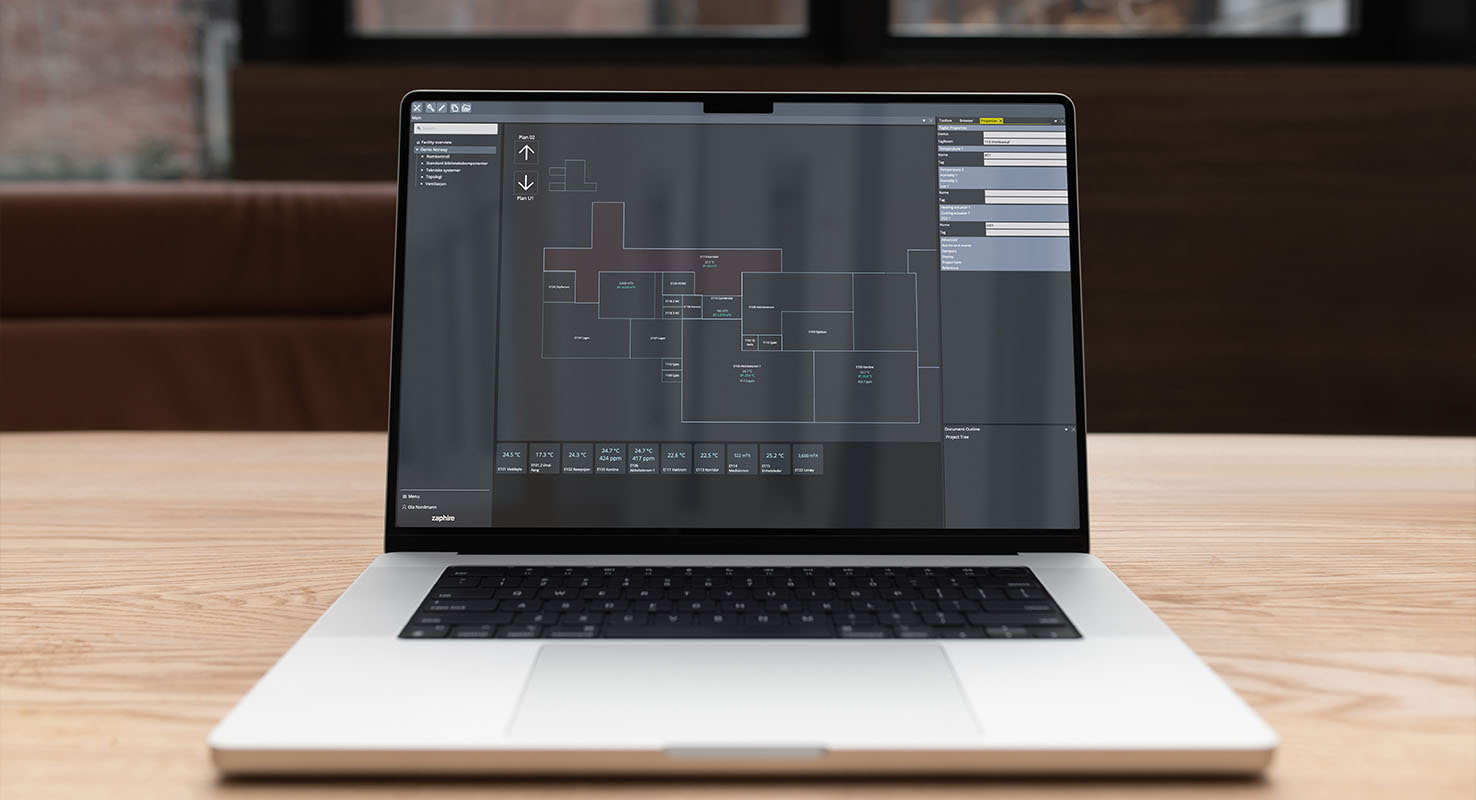
A key difference between Zaphire and traditional BMS systems is how changes are implemented in practice. While traditional solutions often rely on extensive programming, Zaphire is largely configuration-based. This makes it possible to add new data points, systems, and functions quickly, without relying on specialized expertise or long development cycles. System integrators can also quickly create new schematic views for ventilation systems, snow-melting systems, room divisions, and similar applications using drag-and-drop functionality.
The result is shorter implementation times, lower costs, and significantly greater flexibility in the BMS. Changes can be implemented when the need arises, rather than postponed due to complexity or budget constraints.
Open and Future-Oriented BMS
Zaphire is an open and future-oriented BMS that supports open standards and protocols such as BACnet and Modbus. This makes it easy to integrate both existing technical systems and new solutions from various vendors. Openness ensures that the BMS is not locked into a single supplier or technology, providing better conditions for adopting new solutions in energy management, automation, and digitalization. Over time, this approach prepares the BMS for technological change and new requirements.
Security as a foundation for flexible BMS development
In a flexible BMS, security is a prerequisite for safe and reliable development. When systems can be easily expanded and integrated with new technical solutions, data protection, access control, and network architecture must be robust. Zaphire is therefore built with security as an integral part of the platform, following a Zero Trust Security philosophy.
All communication in Zaphire is handled through encrypted APIs using modern security standards (HTTPS, TLS 1.2+ and Forward Secrecy). The solution does not rely on VPN-based communication, reducing known vulnerabilities and enabling secure access without complex network setups. Personal data is always stored encrypted, and continuous updates ensure rapid mitigation of known vulnerabilities. Built-in mechanisms also protect against DDoS attacks, ensuring uninterrupted operation and preventing traffic from spreading into customers’ networks.
The system manages access to the BMS through role-based access control with full transparency. Each area requires explicit invitation, and users are assigned permissions based on role. These may include view-only access to dashboards and energy data, extended rights for configuration and reporting, or full administrative control over users and the system. The result is a flexible BMS that can be safely adapted and expanded without compromising control, traceability, or operational security.

Flexibility in BMS Systems Reduces Long-Term Costs
Flexibility in a BMS often delivers the greatest value over time, but it also has a clear and measurable financial impact from the very first expansion or change. When a BMS is designed for easy adaptation, costs related to operation, changes, and further development of the building are significantly reduced.
In traditional BMS systems, even minor adjustments can require extensive engineering, programming, and external consultants. A flexible BMS enables faster changes. It also reduces the need for resources during implementation. New points, systems, or functions can be added without rebuilding the entire solution, resulting in substantial savingsduring expansions and upgrades.
Reduced vendor dependency and longer system lifespan
Another important economic advantage is reduced vendor dependency. When the BMS supports open standards and is easy to develop further, building owners and asset managers gain greater freedom to choose suppliers and solutions. This leads to better competition, more predictable costs, and greater control over future investments.
Over time, flexibility in a BMS also extends the system’s lifespan. Instead of replacing the BMS when requirements change, the solution can evolve alongside the building. At the same time, a flexible BMS ensures better utilization of existing technical installations, as new solutions can be integrated with what is already in place. The result is a more cost-effectivebuilding, both in the short and long term.