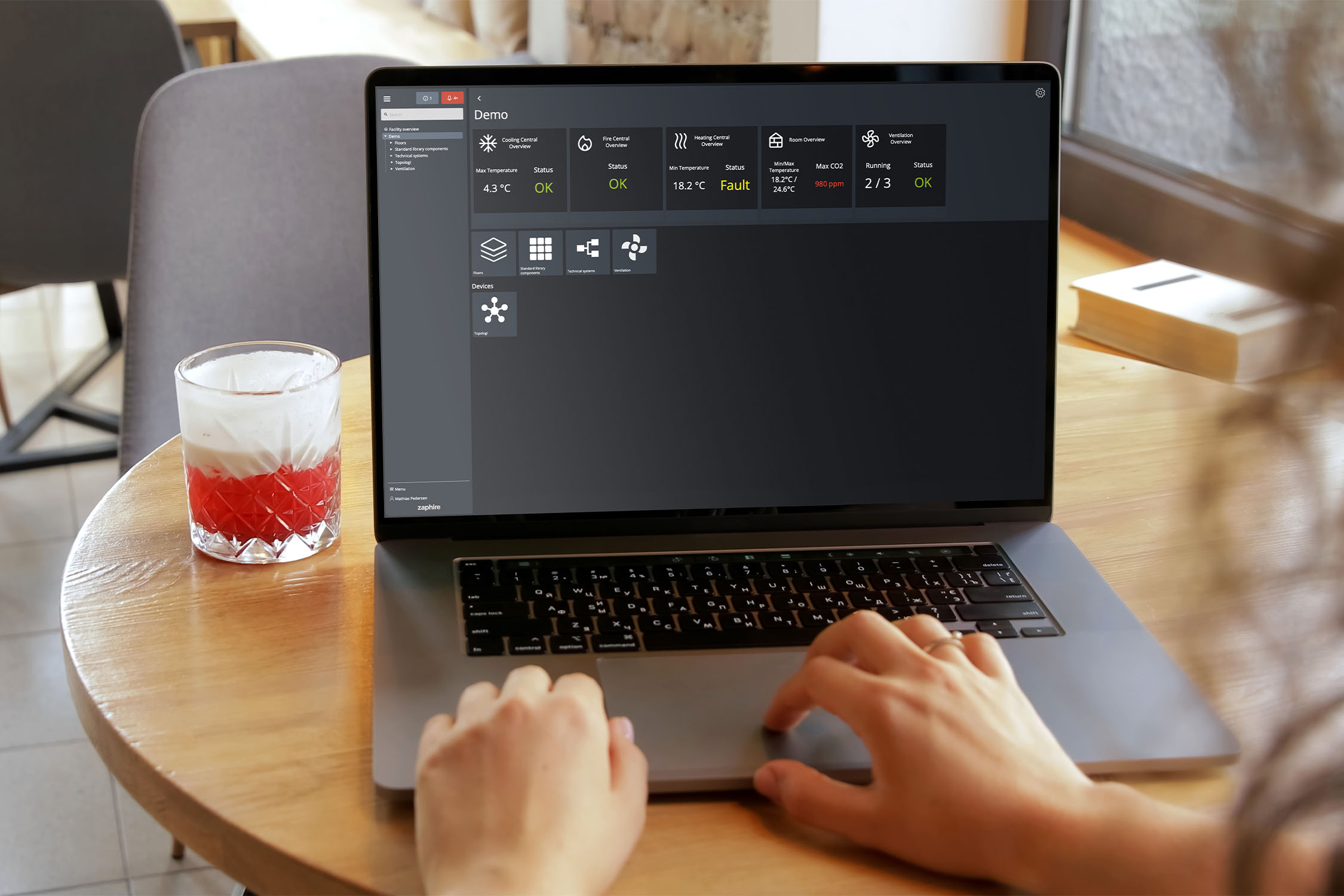
Many buildings and properties are still running on BMS installations designed for a different era of building operations. These systems control large parts of the technical infrastructure, such as ventilation, heating, cooling, lighting, and energy management. Despite this, many building owners and facility managers find that their systems are not fully utilized.
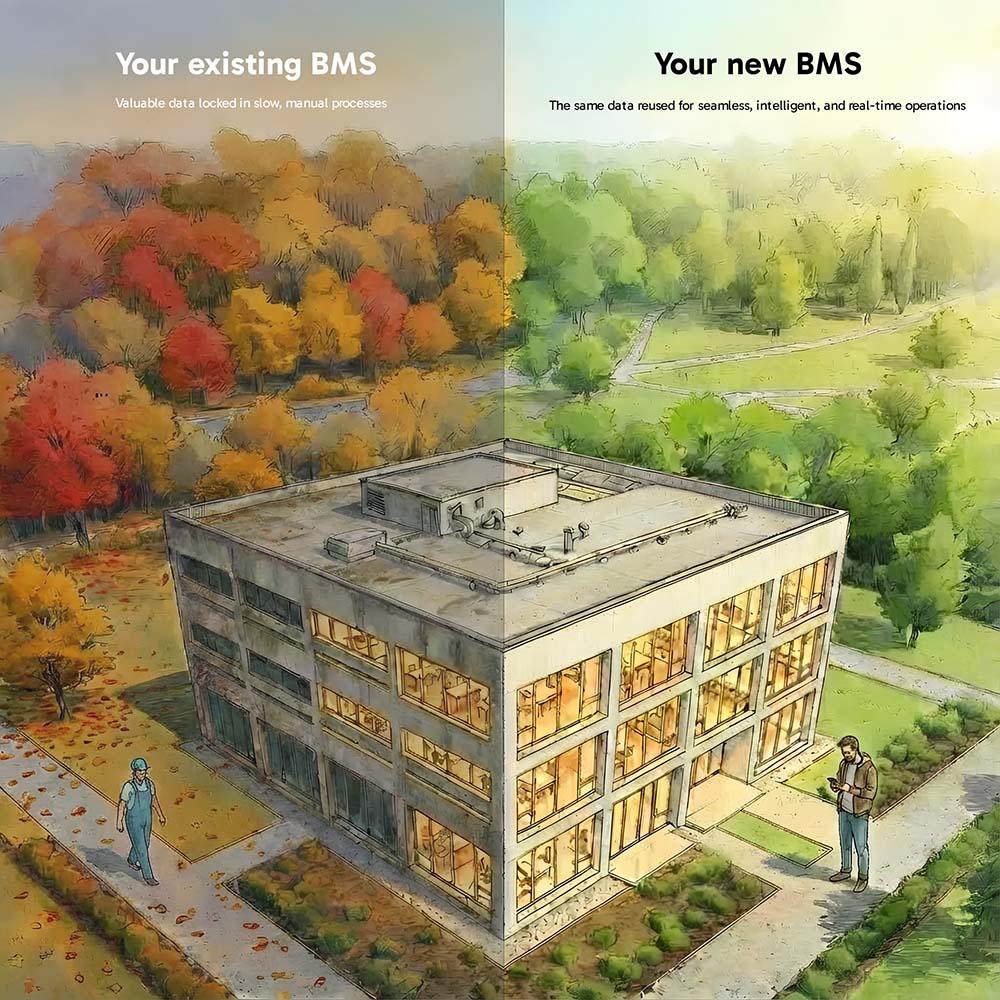
Instead of investing in costly full replacements, an increasing number of organizations are choosing to reuse existing BMS installations through modernization and upgrades of their current building automation systems. By building on the components already in place, it is possible to achieve improved control, reduced energy consumption, and simpler operations, without major physical interventions.
It is important to emphasize that reuse does not mean retaining outdated software. Rather, it involves leveraging existing control points and infrastructure as a data foundation for a new, cloud-based Top System for Building Automation.
What Does Reuse of a BMS Mean, and How Does Modernization Work in Practice?
Reusing a BMS means retaining the main structure of the existing control system while upgrading and modernizing it to meet today’s requirements for functionality, data access, and system integration. This is a key measure within modern building automation, where the goal is to extract more value from existing automation instead of replacing everything from scratch.
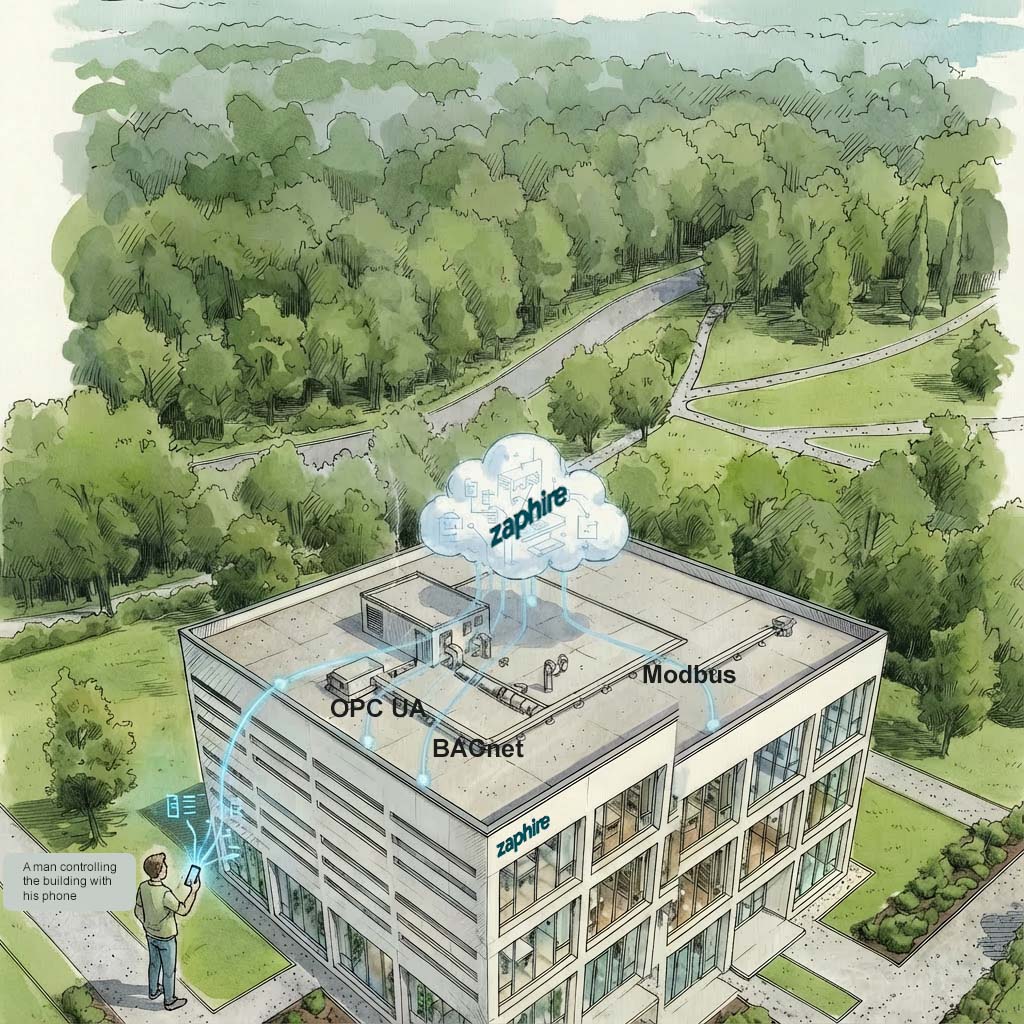
In practice, this means using existing control points, cabling, and automation cabinets as a foundation, and combining them with new technologies that make BMS modernization simpler and more cost-effective. Modernization may involve anything from software upgrades to the installation of gateways that open the system to modern protocols such as BACnet, Modbus, and OPC UA.
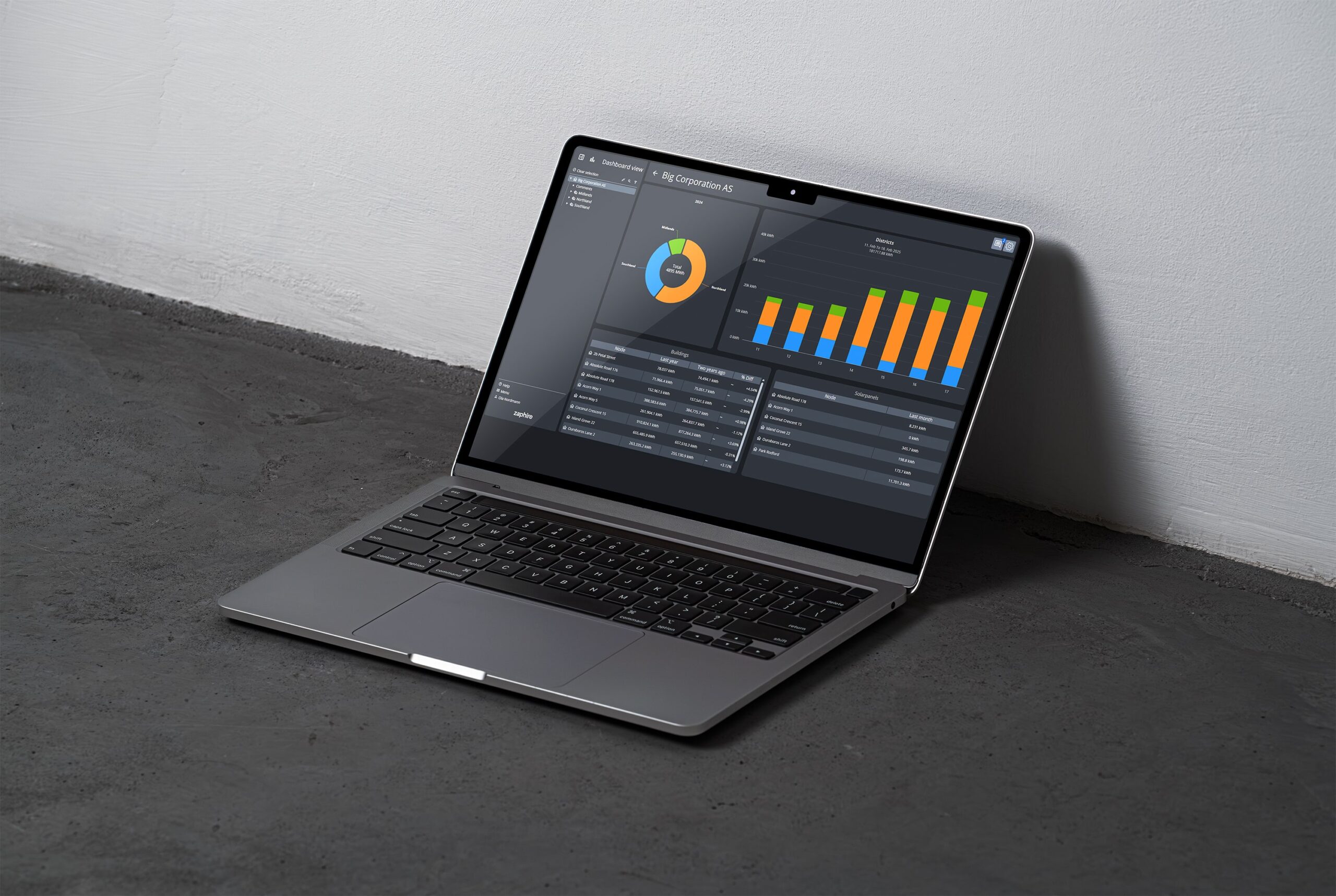
The greatest value is realized when an older BMS is connected to a cloud-based Top System. In this setup, only data and control points from the legacy system are used, while analytics, control logic, and visualization are handled in a modern platform. Many of the benefits of modernizing an existing BMS are also key drivers of energy efficiency in commercial buildings, from improved control and data-driven operations to reduced energy consumption and lower operating costs. With Zaphire as the Top System, users gain access to real-time insights, historical analysis, fault detection, and optimization capabilities that traditional BMS installations in older buildings do not provide.
Challenges with Legacy BMS Systems and Why Modernization Is Necessary
Older BMS installations can present several challenges in today’s building operations. Many are based on proprietary, closed protocols, making it difficult to integrate new technical components or extract data efficiently. They were also often designed primarily for control rather than analytics, resulting in limited insight into real-time performance, energy consumption, and system deviations. This lack of visibility makes it difficult to understand how a building actually operates and significantly limits the ability to work proactively with optimization.
In addition, legacy systems often lack flexibility. Changes in building layout, usage patterns, or functional requirements typically require manual adjustments and specialized expertise that is not always readily available in traditional BMS environments. There is also a security risk associated with outdated systems, as they generally lack modern cybersecurity mechanisms and can be vulnerable when connected to networks.
Finally, older BMS installations often lead to higher operating costs, as troubleshooting and maintenance become more time-consuming and expensive compared to modern solutions.
Data Security and Future-Proofing Through BMS Modernization
Legacy BMS systems were not designed to meet today’s cybersecurity requirements and can be vulnerable when network-connected or integrated with other systems. By moving data processing and analytics into a cloud-based BMS Top System, organizations achieve a significantly higher level of security, including encrypted communication, access control, and continuous security updates. This makes BMS modernization a future-proof strategy.

Benefits of Reusing a BMS Instead of Full Replacement
Modernizing or upgrading an existing BMS delivers substantial benefits. The existing automation and control points are retained, while gaining functionality that only a modern Building Management System (Top System) can provide. This removes the need to operate or update outdated local software.
At the same time, organizations avoid the large capital investments associated with full system replacement and can carry out modernization quickly with minimal operational disruption. When data is integrated into Zaphire, entirely new opportunities emerge for energy monitoring, fault detection, historical analysis, trend analysis, and automated optimization - in other words, true BMS modernization without replacing the underlying automation.
How to Modernize and Upgrade a BMS in Practice
Modernization begins with an assessment of the existing BMS and its integration capabilities. The system is then opened via gateways or protocols that make it compatible with modern BMS platforms.
Integration with Zaphire as a Cloud-Based Top System
Once the traditional BMS is enabled for modern communication, it can be connected directly to Zaphire. This enables real-time data collection, fault alerts, energy analytics, and improved decision support, without replacing the automation layer. The legacy BMS becomes a stable data source, while Zaphire provides the intelligence, visualization, and optimization.
When Is It More Cost-Effective to Reuse Rather Than Replace?
Reusing an existing BMS is cost-effective when the infrastructure is still functional but lacks modern capabilities. It is also an excellent solution when energy efficiency improvements are a priority or when budgets are limited. With Zaphire, organizations can quickly unlock the value of modernizing their BMS and elevate building automation to a cloud-based level.
Optimizing an Existing BMS with Zaphire
By leveraging Zaphire’s functionality, organizations can rapidly reuse data from their existing BMS and optimize building automation without extensive replacements. A case study from the building sector shows that targeted optimization of building automation can reduce energy consumption by nearly 30 percent in under one year. The largest gains came from relatively small but precise operational adjustments, such as improved demand-controlled ventilation, more accurate scheduling, and the elimination of simultaneous heating and cooling.
Zaphire enables this by using existing BMS control points as data sources and performing continuous, cloud-based analysis of building operations. The platform quickly identifies inefficiencies such as excessive airflow outside occupancy hours or temperature deviations that drive unnecessary energy use.
When real-time BMS data is combined with Zaphire’s analytics tools, it becomes straightforward to implement data-driven measures such as tighter operating schedules, improved ventilation control, and HVAC process optimization. In this way, organizations can achieve significant energy savings without replacing automation - simply by elevating control to a modern, cloud-based platform.